
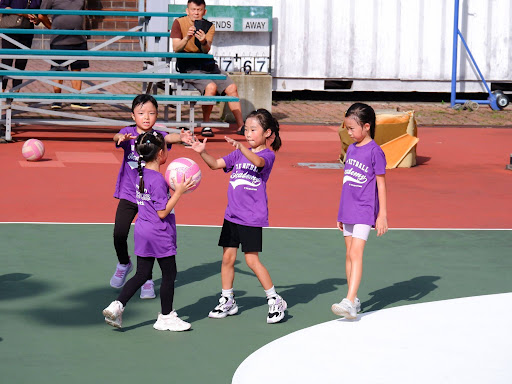
Your daughter just came home from PE lesson buzzing about netball, or she’s been playing with her school team for a term now, and you’re wondering what comes next. Choosing between recreational vs competitive netball shapes how much time, money and pressure your family takes on, and getting it wrong can mean burnout on one end or boredom on the other.
This guide breaks down both paths for parents of players aged 10 to 12, using real terms, real costs and the questions Singapore parents actually ask before signing up.
Key Takeaways
- Recreational netball focuses on fun, fitness and basic skills with low commitment; competitive netball adds structured drills, selection trials and match intensity.
- Age 10-12 (Primary 5-6) is the typical window where Singapore parents decide whether to push toward school team trials or keep things casual.
- Competitive pathways usually mean 2-3 training sessions a week, versus one weekly class for recreational players.
- Cost, time and your child’s own enthusiasm matter more than talent when picking a path.
- Both paths can lead to competitive netball later, recreational play now does not close that door.
What Recreational Netball Actually Means
Recreational netball is training built around enjoyment, movement and basic skills rather than results. Sessions are usually once a week, group-based, and mixed-ability. Nobody’s getting benched for missing a pass.
For children aged 10-12, this looks like structured play, footwork, catching, throwing, simple positional rules, wrapped in games and drills that don’t feel like homework. There’s no selection trial to get in, and no league table to climb. Regular movement at this age also supports the kind of healthy childhood development that goes well beyond the netball court.
Who Recreational Netball Suits
This path suits a child who:
- Wants to try netball without committing to a team
- Plays multiple sports or CCAs and needs flexibility
- Gets anxious about competition or being “not good enough”
- Is newer to the sport and still building basic coordination
It’s also the right call if your family’s week is already packed with tuition, other CCAs or family commitments. One session a week is sustainable in a way that three isn’t.
Who Recreational Netball Does Not Suit
If your child is already asking to join her school’s netball team, or she’s shooting hoops in the void deck on weekends because one class a week isn’t enough, recreational-only training will likely frustrate her and limit her growth as a sportsman. Kids who crave structure and challenge tend to plateau fast in a purely social, casual setting.
What Competitive Netball Involves

Competitive netball is structured around progression, engineered setplays, skill benchmarks, fitness conditioning, positional specialisation and, eventually, matches or trials against other schools or clubs. In Singapore, this typically starts becoming relevant from upper primary, when schools begin CCA trials for netball school teams.
Training is more frequent (often two to three sessions weekly), coaches track individual progress, and players are expected to turn up consistently, even when it rains or homework piles up.
Who Competitive Netball Suits
This path fits a child who:
- Has shown consistent interest over several months, not just one exciting PE lesson
- Handles feedback and correction without shutting down
- Wants to try out for a school team or is already on one
- Has some baseline fitness or is willing to build it
Who Competitive Netball Does Not Suit
A child who plays netball once and finds it “quite fun” is not automatically competitive-track material, and that’s fine. Pushing a reluctant 10-year-old into twice-weekly drills and fitness circuits usually backfires. Watch for early signs of dread before training days; that’s a signal to dial back, not push harder.
Youth netball training works best when the intensity matches the child’s own appetite for it, not the parent’s ambition.
Side by Side: Recreational vs Competitive Netball
| Factor | Recreational Netball | Competitive Netball |
| Training frequency | Usually 1 session per week | Typically 2-3 sessions per week |
| Focus | Fun, fitness, basic skills, games | Skill mastery, positional play, match strategy |
| Entry requirement | Open enrolment, no trial | Often requires selection or assessment |
| Commitment level | Flexible, low-pressure | Consistent attendance expected |
| Typical player goal | Try the sport, stay active, make friends | Join school team, compete in tournaments, progress to elite level |
| Coaching style | Group-based, encouragement-led, casual | Individual feedback, performance tracking, structured feedback with intentional coaching points |
| Best suited for | Beginners, multi-CCA kids, shy or anxious players | Confident players wanting a challenge, aspiring team members |
How to Choose: A Practical Checklist
Ask yourself these questions before enrolling:
- Has she asked for more, unprompted? Wanting extra sessions herself is a stronger signal than a parent’s hope for it.
- Can your week actually fit it? Two to three sessions plus school CCA trials is a real time commitment, check the calendar, not just the enthusiasm.
- How does she handle corrections? Competitive coaching involves being told what to fix. If that currently causes tears or shutdown, recreational play first builds resilience and confidence.
- What’s the budget for this term? Competitive-track training generally costs more per month due to higher session frequency, worth comparing against a full pricing breakdown before committing.
- Is there a trial option? Many programmes offer a taster session so you’re not guessing.
If most answers point to “not sure yet,” start recreational. You can always step up later, there’s no rule saying competitive netball must start at age 8.
The Overlooked Factor: Growth Spurts and Physical Readiness
Most articles on this topic skip a fairly important detail, physical development between ages 10 and 12 varies enormously. Two girls in the same class can differ by a head in height, and this affects footwork, balance and injury risk far more than “talent” does.
A child going through a growth spurt may temporarily look clumsier on court, legs feel heavier, coordination lags behind limb length, a pattern well documented in research on growth spurts and adolescent motor coordination. Pushing hard competitive training during this phase, especially footwork-heavy drills and jumping, without proper conditioning can raise injury risk, particularly around the growth-plate and overuse injuries common in young athletes during rapid growth. Coaches experienced with this age group build in mobility and landing technique work specifically for this reason, not just shooting and passing drills.
This is also why coach experience matters more at this age than at any other. The coaches clinic at The Netball Academy exists partly to make sure coaches working with 10-12 year-olds understand these physical stages, spotting when a player needs a lighter load versus when she’s ready to be pushed, rather than applying the same drills to everybody in the room.
Objection 1: “Will Competitive Netball Be Too Much Pressure for My Child?”
This is the most common worry parents raise, and it’s a fair one. Pressure comes less from the sport itself and more from how it’s coached. A good programme for this age group frames competition as skill-building, not win-at-all-costs. Look for coaches who give specific, constructive feedback and the drive to improve rather than just scorekeeping.
If your child already shows anxiety about mistakes in other areas, schoolwork, other sports, ease her in gradually, in line with broader guidance on managing sport-related stress in young athletes. Many programmes let players move from recreational classes into competitive-track training mid-term once they’ve built confidence, rather than forcing a choice upfront.
Objection 2: “What If She’s Not Talented Enough to Go Competitive?”
Talent at age 10-12 is mostly unformed. Coordination, height, speed and confidence all shift dramatically over the next two to three years. A child who struggles to catch consistently in Primary 5 can be a solid mid-court player by Primary 6 with the right structured practice.
What actually predicts progress at this age is attendance and attitude, not natural ability. Weekly repetition of footwork, catching and positioning drills, the kind covered in structured youth netball training, builds competence faster than most parents expect.
Objection 3: “How Much Will This Cost, and Is It Worth It?”
Cost is often the deciding factor between paths, and it’s reasonable to weigh it. Recreational classes, being lower-frequency, generally cost less per month than competitive programmes with multiple weekly sessions. Term-based registration is standard across most Singapore netball providers, with per-session or per-term pricing options.
Rather than guessing, check the actual training pricing structure for your child’s age group before deciding, it’s usually clearer to compare against a real fee table than to estimate.
Beyond fees, factor in gear. A decent pair of netball shoes designed for court movement matters more at competitive intensity, where landing and pivoting happen constantly, than for once-a-week recreational sessions. Apart from shoes, socks matter too. Certain materials of socks can directly cause blisters especially when change of directions are often. Additionally, protective wear like braces, and tapes can lead up to a hefty sum.
What Happens Around Primary 6
Primary 6 is a natural checkpoint. Many players either push toward secondary school trials, step back to focus on the PSLE year or explore another sport in secondary school. If your child is at this stage and eyeing a spot on a secondary school team, mastery-style preparation, sessions specifically geared toward trial readiness, can bridge the gap between casual play and competitive selection.
This is also when the difference between the two paths becomes most visible: recreational players often keep playing for fun without any trial pressure, while competitive-track players start facing actual selection processes with cuts and callbacks.
Making the Transition Between Paths
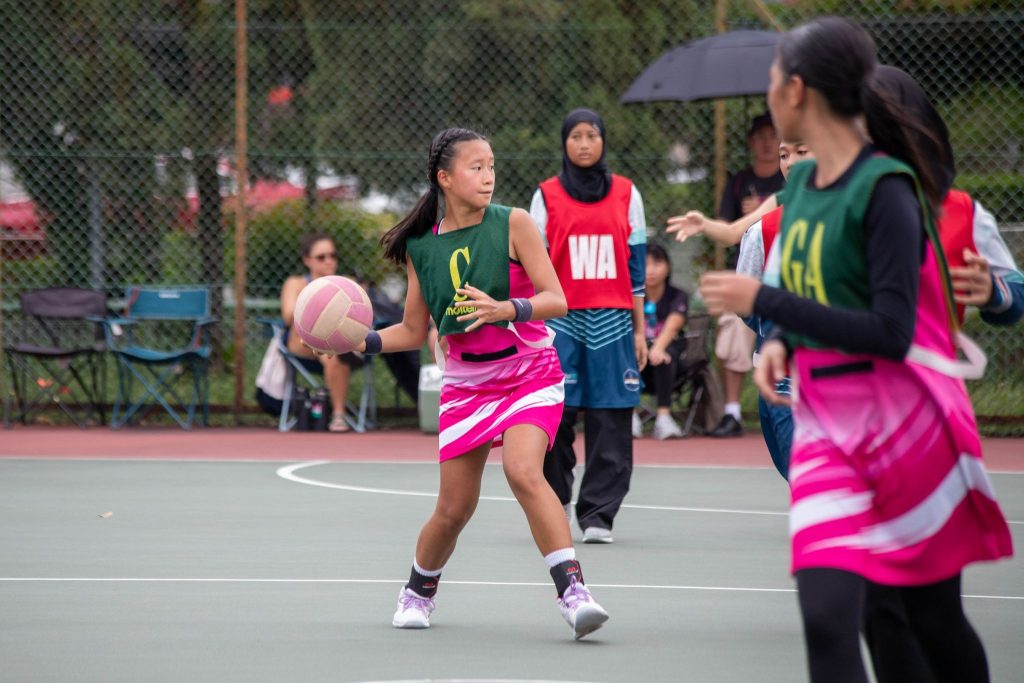
Neither path is permanent. A recreational player who suddenly develops the appetite for competition can move up. A competitive player feeling burnt out can step back to recreational sessions without quitting the sport entirely.
Signs it’s time to move from recreational to competitive:
- She’s asking why training is only once a week
- She’s watching netball matches or highlights unprompted
- She wants constructive feedback, not just praise
- She’s expressed interest in trying out for a school team
Signs it’s time to ease off competitive intensity:
- Dread or reluctance before training days
- Repeated minor injuries or fatigue complaints
- Grades slipping alongside training load
- Loss of interest in the sport generally
Frequently Asked Questions
There’s no fixed rule, but most Singapore schools begin CCA netball trials from upper primary, around age 10-12. Starting structured training a year or two before trials gives players time to build fundamentals without rushing.
Yes. Recreational training builds the same foundational skills, footwork, catching, passing, that competitive coaching later refines. Many players move between the two as confidence and interest grow.
Recreational players typically manage well with one session weekly. Competitive-track players usually train two to three times a week, though this should scale with the child’s fitness and school workload, not be fixed in advance.
Court-specific shoes with good lateral support matter more as training intensity increases, since netball involves frequent pivoting and landing. A shoe built for netball rather than general sport reduces ankle strain during higher-frequency training.
Talk to the coach first, sometimes it’s fatigue or a specific frustration that’s fixable, not a genuine dislike of the sport. Many programmes allow a pause or a switch to a lower-intensity class rather than a full withdrawal.
Ready to Find the Right Fit?
Book a trial session to see how your child responds to structured coaching before committing to a term. It’s the simplest way to know whether recreational or competitive netball is the better starting point, no guessing required. While you’re setting up her kit, a proper training ball, like the Molten Orange netball in size 4, makes home practice between sessions far more effective, and branded gear such as team apparel or a small keychain for her bag can help her feel part of the team from day one.