

Coaches build netball game intelligence by combining small-sided games, repeated decision-making drills, and constant questioning during practice, so children learn to read the court rather than just execute moves and go through motion. Rather than only drilling footwork or shooting, coaches design sessions where children must read the court, choose their next move, and adjust when the play changes. This helps children to develop quick thinking on court, as well as learn to be confident in their own choices on court. This is how netball game intelligence actually develops, through practice and correction, not lectures.
For parents in Singapore searching for structured weekend training, this matters more than it sounds. A child who can shoot well but freezes under pressure will struggle in real matches. Game intelligence and adaptability closes that gap.
Key Takeaways
- Netball game intelligence grows through repetition and correction in game-like situations, not through verbal instruction alone.
- Netball decision making improves fastest when children are given limited time and real consequences during drills.
- Netball court awareness is taught using visual cues, spacing games, and positional rotation from an early age.
- Structured netball training Singapore programmes, such as weekly classes and school holiday clinics, build these skills progressively over months, not one session.
- Parents can support this development at home with simple, low-pressure activities between formal sessions.
What Game Intelligence Actually Means in Netball
Game intelligence is the ability to read an in-game situation and act on it quickly. In netball, this means knowing where to position yourself, when and who to pass to, and how to anticipate an opponent’s next move. It is different from raw skill.
A child can have a clean shooting technique yet still struggle in matches if she cannot judge when to shoot, pass, or hold the ball for a tad bit longer. Coaches call this the gap between technical ability and tactical understanding. Closing that gap is the real goal of youth netball coaching.
Why It Matters More at a Young Age
Children aged 5 to 12 are still building basic movement patterns. Layering decision-making on top of that too early can overwhelm them. Good coaches sequence this carefully, so each stage adds just enough challenge without tipping into frustration. This staged approach reflects the same age-appropriate philosophy behind long-term athletic development used across youth sport more broadly, not just netball.
- Ages 5–7: focus on spatial awareness and simple reactions, such as moving to open space.
- Ages 8–10: introduce basic decision-making under light pressure, like choosing the best pass option.
- Ages 11–12: build full netball decision making under game conditions, including reading opposition patterns.
This staged approach avoids frustration and keeps training age-appropriate, something structured netball training in Singapore programmes are generally built around.
Core Coaching Methods That Build Game Intelligence
Coaches use a mix of methods rather than relying on one technique. Each targets a slightly different part of a child’s decision-making process.
1. Small-Sided Games
Instead of running full 7-a-side matches early on, many coaches use modified 3v3 or 4v4 formats. Smaller games mean each child touches the ball more often and faces more decisions. This repetition builds pattern recognition faster than standing in a queue for a full-court drill.
2. Question-Based Coaching
Rather than telling a child exactly where to stand, a coach might ask, “What did you see there?” or “Why did you choose that pass?” This forces the player to explain her own thinking. Over time, this builds independent netball court awareness instead of dependence on instructions.
3. Constrained Practice Games
Coaches sometimes limit options on purpose, for example, banning the high pass for one drill, or setting a three-second rule to hold the ball. These constraints push players to scan the court and decide faster, which mirrors real match pressure.
4. Video and Visual Reference (for older groups)
For children closer to 11 or 12, some coaches use short video clips of match play to highlight spacing or missed passing lanes. This works best sparingly, as young attention spans are short, but it builds a visual reference for what good court awareness looks like. Video evidence and correction while watching videos of gameplay can help with visualising on specific court situations
Key insight: Small-sided games generally build decision-making faster than full-court drills, simply because each child gets more touches and more choices per session.
How Coaches Sequence Skill Development Over Time
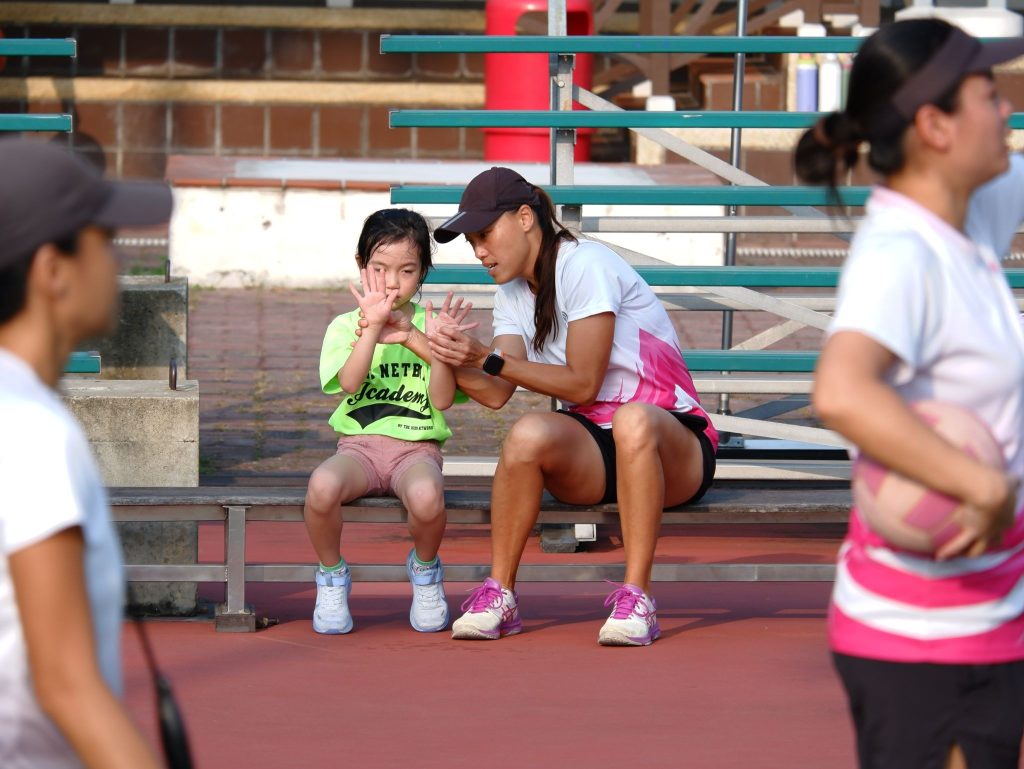
Game intelligence is never built in one lesson. It compounds across weeks and terms. Below is a general progression many structured netball programmes in Singapore tend to follow, broadly consistent with the player pathway framework set out by the sport’s national governing body.
| Stage | Typical Age Range | Main Focus | Example Activity |
| Foundation | 5–7 years | Spatial awareness, basic movement | Find-the-space tag games |
| Development | 8–9 years | Simple decisions, passing choices | 4v4 possession games |
| Application | 10–11 years | Reading opponents, positional roles | Constrained small-sided matches |
| Refinement | 12 years | Full decision making under pressure | Match simulations with rule limits |
This table is a general guide. Actual pacing depends on each child’s confidence and prior exposure to team sport, not just their age.
Why Consistency Matters More Than Intensity
A child attending weekly sessions over several months typically develops sharper court awareness than one attending occasional intensive camps alone. Game intelligence is built through repeated, low-stakes reps, not cramming. This is one reason weekly classes and holiday clinics work well together: one builds consistency, the other adds concentrated practice during school breaks.
Netball Decision Making: What Coaches Look For
Coaches watching a young player’s decision making usually assess a few specific things during a game, rather than judging on goals scored alone.
- Does she look before receiving the ball? Scanning the court before catching shows early awareness.
- Does she choose the safest pass or the smartest one? Safe isn’t always smart, sometimes a slightly riskier pass breaks a defensive line.
- Does she adjust position after losing the ball? Recovery decisions matter as much as attacking ones.
- Does she communicate with teammates? Calling for the ball, giving feedback or signalling space is an early sign of tactical thinking.
- Does she recognise patterns in the opposition? Older, more experienced players start noticing repeated defensive or attacking setups.
Key insight: Coaches often value a well-timed pass over a spectacular one — decision quality is judged by outcome and timing, not flash.
Can Parents Help Build Game Intelligence at Home?
Yes, to a degree. Parents do not need coaching qualifications to support this. Simple activities can reinforce what coaches teach during formal sessions.
- Play quick reaction games in the garden or void deck, like calling out directions for the child to move.
- Watch short clips of netball matches together and ask, “What would you do here?”
- Encourage games involving quick choices, such as tag variants with limited “safe zones.”
- Avoid over-correcting technique at home, leave that to the coach, and focus on curiosity and enjoyment instead.
What parents should avoid is turning every kick-about or backyard session into a lecture. Game intelligence grows through play, not pressure.
When a Child Seems Stuck
Some children plateau, they know the rules but hesitate under pressure. This is common and not a sign of low ability. It usually means the player needs more repetitions and affirmations in small-sided, lower-pressure formats before stepping back into full matches. A qualified coach can adjust drills accordingly, which is harder to replicate accurately at home.
Why Structured Programmes Matter for This Skill
Game intelligence rarely develops well through unstructured play alone. Structured netball training Singapore programmes are designed around progressive stages, proper coaching ratios, and consistent exposure to game situations, something casual practice sessions or one-off camps cannot fully replicate.
The Netball Academy, Singapore’s first dedicated netball academy, structures its programmes around exactly this kind of progression. Its weekly training classes are grouped by age and skill level, allowing coaches to build decision-making skills gradually rather than cramming tactics into a single session. For children who want a shorter, intensive burst of learning, the School Holiday Clinic offers camp-style sessions during school breaks, suited to both beginners and more experienced young players.
For children preparing for school netball trials, the Mastery Clinic focuses specifically on refining game intelligence alongside fitness and technical skill, useful for players aiming to make a school team where tactical understanding is assessed alongside raw ability, in line with how official guidance on co-curricular sports trial selection describes the process. Families with very young children, aged 2.5 to 5, can also start early through a multi-sport collaboration programme designed to build coordination and movement foundations before formal netball training begins.
What Makes This Approach Different
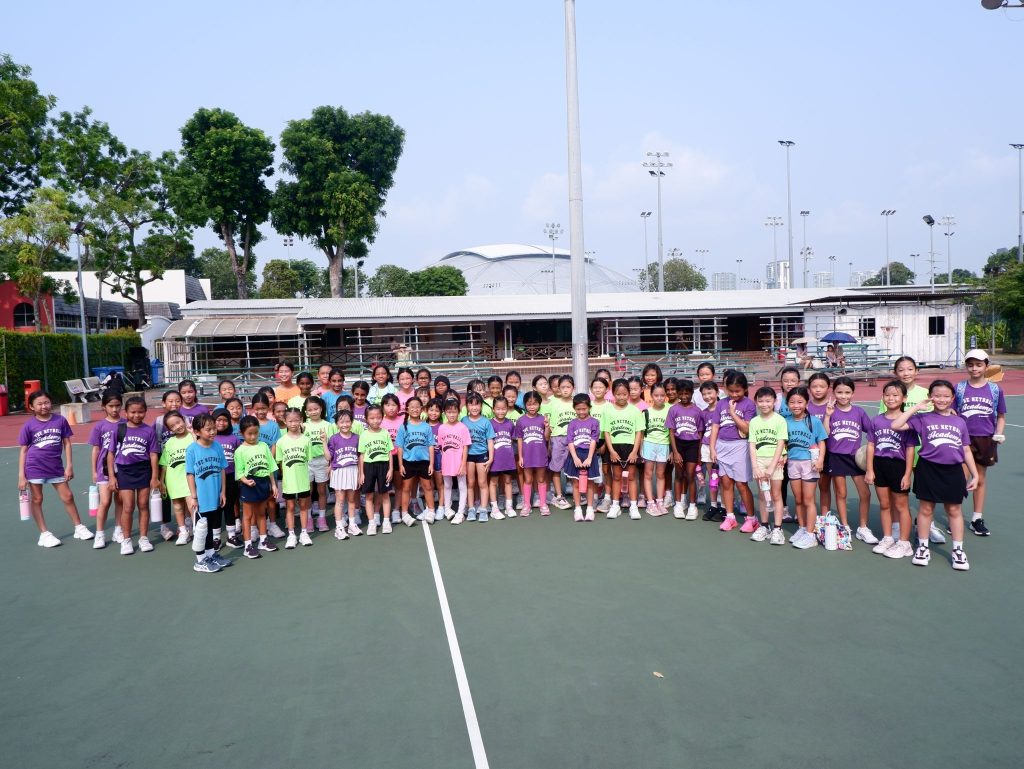
Unlike general sports enrichment classes that rotate between several sports, this academy’s entire curriculum is built around netball specifically. Coaches are not splitting attention across football drills one week and basketball the next. Every session, camp, and clinic is designed with one sport’s tactical demands in mind, which matters when the goal is deep game understanding rather than general fitness.
- Weekly classes build consistency and long-term skill layering.
- Holiday clinics offer intensive, short-format practice during school breaks.
- The Mastery Clinic targets school-trial readiness, including tactical assessment.
- Private coaching is available for players needing more individual attention.
- Team coaching support is offered for school and club sides preparing for competition.
Frequently Asked Questions
Most coaches introduce very light tactical thinking around age 7 or 8, once basic movement and ball-handling are comfortable. Before that, the focus should stay on coordination, fun, and simple spatial games. Pushing tactics too early can slow down enjoyment and confidence, so pacing matters more than starting age alone.
There’s no fixed timeline, since it depends on how often a child plays and how varied the game situations are. Many coaches see noticeable improvement after several months of consistent weekly training, particularly when small-sided games are used regularly. Progress tends to be gradual rather than sudden, so parents should expect steady rather than dramatic gains.
Not necessarily. Group classes expose children to more varied, realistic decision-making scenarios because there are teammates and opponents to read. Private coaching is useful for refining specific weaknesses, such as hesitation under pressure, but it works best alongside group play, not instead of it.
Yes, this is fairly common, especially in newer players. Knowing rules and applying them under pressure are different skills. Coaches usually address this by increasing exposure to small-sided, lower-pressure games before reintroducing full matches, which gives the child more reps without the intensity of a full-sided game.
Well-structured holiday clinics do address tactical skills, not only fitness. Camp-style formats allow for concentrated, repeated exposure to game situations over consecutive days, which can accelerate pattern recognition faster than once-a-week sessions alone, especially when paired with ongoing weekly training afterwards.
What to Do Next
Strong netball game intelligence is built step by step, so the most useful next move is a small one: check the age-group placement and weekly schedule for a structured programme before enrolling, rather than picking a class on timing alone. If you’re weighing options, start by comparing a weekly class against a school holiday clinic for your child’s current age and confidence level, then speak to a coach about which one fits where your child is right now.